Mineral character before prestige
Natural stone is not a uniform medium waiting to receive a design. Marble is a metamorphic rock; many familiar white marbles are rich in calcite. Limestone is sedimentary and may preserve bedding, fossils and a more visibly open pore structure. Granite is an igneous rock with interlocking crystals, commonly including quartz and feldspar. These distinctions matter because they influence the tools, surface response and environmental vulnerabilities of a finished sculpture. A prestigious name does not remove the need to understand the particular material.
Carrara, in Tuscany, offers a useful reminder that a place name encompasses variation rather than one identical white stone. The Apuan Alps contain deposits with different grain, veining and working qualities. Michelangelo’s association with Carrara is part of sculpture history, not a guarantee that any modern block from the region will suit a proposed form. Ask the maker what the selected block permits, what it resists, and which visual characteristics may become more pronounced as the surface is worked.
Structure is part of the composition
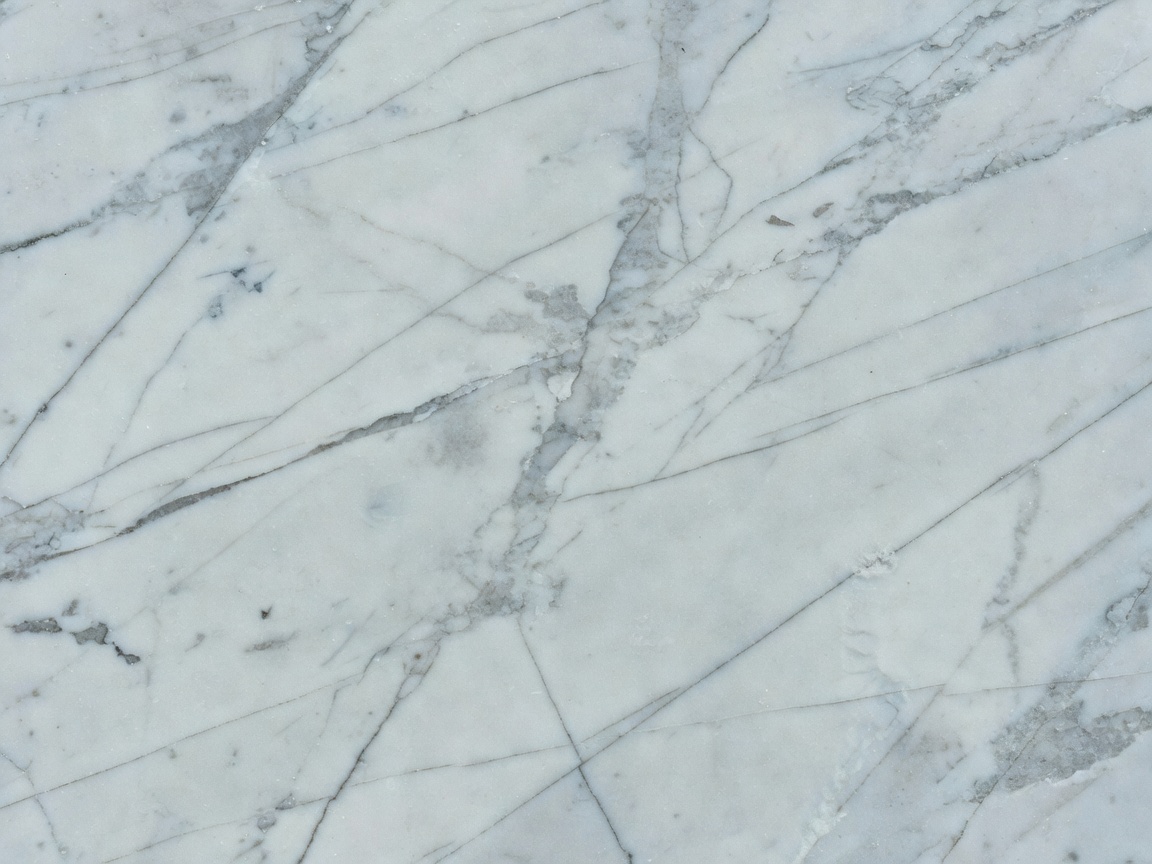
A vein may be mineral colour, a filled discontinuity or a feature requiring closer assessment. It cannot reliably be classified from an attractive photograph. Bedding planes, stylolites, open fissures and previous repairs can influence orientation and the safe thickness of projecting elements. Request views of all accessible faces, information about treatments, and a conversation about how the form will sit within the block. When the proposal involves slender sections or significant structural risk, specialist assessment may be appropriate.
Portland Stone, associated with the Isle of Portland, and Bath Stone, quarried in the wider Bath region, demonstrate the expressive possibilities of limestone. Both have architectural histories, but that history should not become a blanket promise about every quarry bed, finish or exposure. Indiana limestone provides another point of comparison: suitability is tied to a defined material and use, not simply to the category “limestone.” Clarify the actual source and intended orientation rather than relying on a broad family description.
A finish changes what you see
A honed surface scatters light differently from a polished one. Tooling may emphasise the direction of a gesture, while a high polish can make colour and mineral contrast more legible. Neither finish is inherently more artistic or more durable. A sample should be made in the proposed stone using the proposed method, then viewed under conditions close to the final setting. A small, polished sales sample can mislead when the intended work is large, deeply carved and softly lit.
Calcite-rich marble and limestone are vulnerable to acids, including some household cleaners and food spills. Granite generally behaves differently, but the label does not establish the performance of every mineral component or surface treatment. If a sculpture will be touched, placed near food, exposed to irrigation or installed outdoors, discuss those conditions early. Ask whether staining, etching or biological growth is likely, and whether the proposed appearance can be maintained without disproportionate intervention.
Provenance is more than an origin story
Useful provenance includes the quarry or supplier, block identification where available, purchase records, treatment information and the chain of responsibility for selection. It can also include questions about extraction practices, transport and waste. A local stone is not automatically the least-impact option, just as a distant stone is not automatically inappropriate. Consider quantity, yield, fabrication, transport routes and expected service life together. Ask for specific evidence rather than general statements about natural materials being sustainable.
The British Geological Survey offers a vocabulary for understanding rock types and geological context. ASTM C503/C503M addresses marble dimension stone, while ASTM C568/C568M concerns limestone dimension stone. Such references can inform procurement discussions, but they do not certify an individual sculpture or replace a maker’s judgement and project-specific engineering. Establish which tests, descriptions or certificates are actually relevant to the commission instead of collecting paperwork without a clear question.
The selection conversation
Bring a description of scale, setting, desired surface and tolerance for natural variation. Ask what remains unknown until cutting begins, who approves a substitute block and how a material-related redesign would be handled. Record the agreed sample and selection in writing. The most valuable choice is not necessarily the rarest stone: it is the stone whose character can be understood, worked convincingly and cared for in the life you intend for it.