A brief that leaves room for art
A useful brief describes the intended encounter rather than dictating every contour. Explain where the sculpture will stand, how it will be approached, which views matter and whether touch is expected. Share the practical boundaries: available space, access, structural constraints and the level of documentation required. Distinguish fixed requirements from preferences. This allows a maker to respond with an artistic proposition rather than merely translate a list of dimensions into stone.
A sketch, maquette or digital model can establish proportion and direction, but each medium leaves something unresolved. Clay may suggest movements that a particular stone cannot sustain. A screen can obscure weight and surface response. Ask what each approval means and whether a full-scale outline, mock-up or sample is needed. The Henry Moore Foundation’s collection demonstrates the productive relationship between studies and larger works; it does not imply that every commission should follow the same sequence.
Reading and orienting the block
Before substantial removal, the maker considers the block’s orientation, visible discontinuities and the distribution of material around the intended form. A design may shift to accommodate grain or avoid a vulnerable projection. That adaptation should not be confused with careless deviation. Agree which changes can be made through the maker’s normal judgement and which require renewed approval. The agreement should also address what happens if a previously concealed defect appears after work has begun.
Pietrasanta and Carrara are important centres in the history and continuing practice of stone sculpture. Their workshops illustrate that artistic authorship and skilled fabrication can involve more than one person. Ask who selects the block, who performs the carving, who directs assistants and who resolves the final surface. Clear attribution is more useful than an assumption that every celebrated sculptor must personally perform every stage of material removal.
Tools are means, not a hierarchy
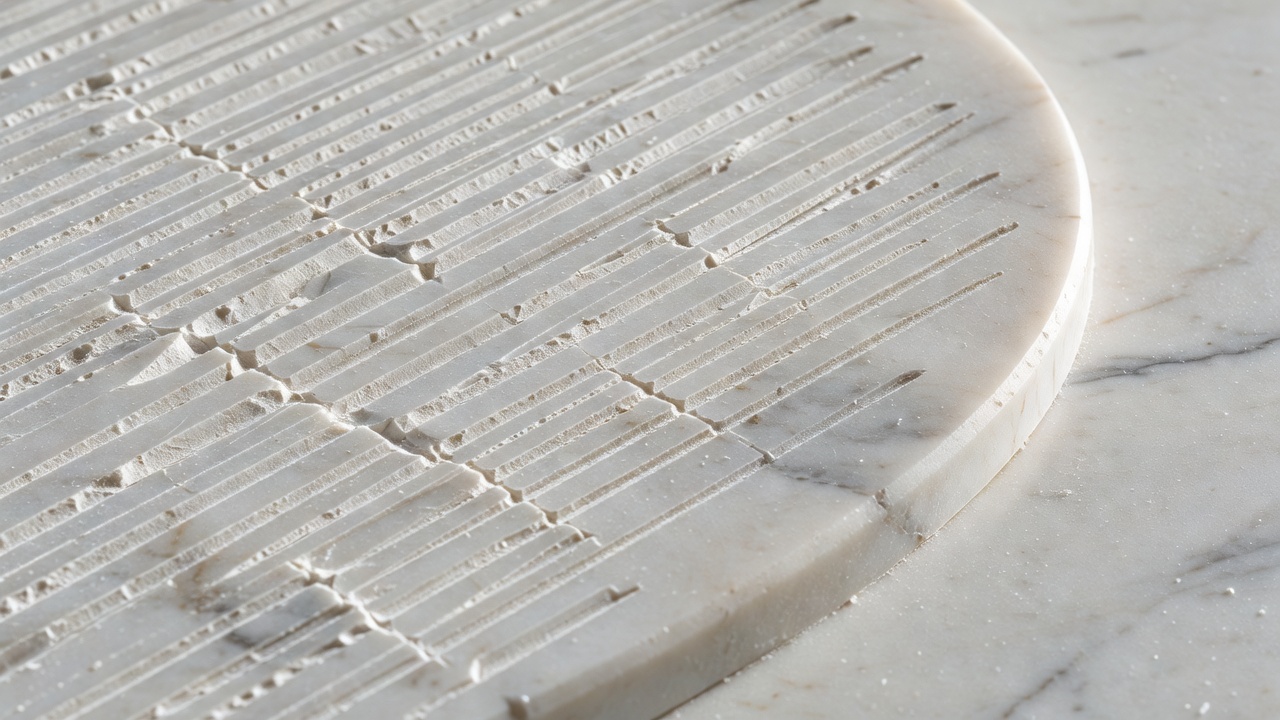
Roughing can involve saws, drills, pneumatic tools, hand tools or computer-controlled machining. A point chisel removes stone differently from a tooth chisel; abrasives produce another family of effects. Digital processes may establish a rough volume or transfer a complex model, while handwork can refine transitions and surface decisions. Conversely, a deliberately tooled finish may preserve forceful marks. The meaningful question is how the chosen process serves the work, not whether one tool automatically confers authenticity.
Constantin Brâncuși’s polished forms and Barbara Hepworth’s attention to pierced space offer different ways of thinking about surface and volume. Their work is a prompt for looking, not a catalogue of finishes to reproduce. When discussing a commission, describe what you respond to: a quiet transition, a crisp silhouette, the visibility of grain, or the contrast between rough and smooth. A maker can then translate that observation into a material-specific proposal.
Approvals at consequential moments
Identify review points before the process begins. These might include the model, actual block, rough form and representative finish. A review should have a purpose: confirming silhouette, checking dimensions or approving surface character. Too many approvals can turn artistic development into repeated interruption; too few can leave major assumptions untested. Document what has been approved and how later changes affect scope, responsibility and scheduling. Avoid treating a casually shared progress photograph as a complete technical inspection.
Stone dust and heavy handling are workshop hazards, not picturesque details of craft. The Health and Safety Executive provides guidance on respirable crystalline silica and workplace controls. A patron should not prescribe unsafe methods or assume that a studio visit permits unrestricted access. Ask how visits are arranged and follow the workshop’s safety instructions. The maker’s approach to health, handling and housekeeping is a legitimate part of understanding professional practice.
What should leave the workshop
The handover should extend beyond the sculpture itself. Request final dimensions, weight information, handling restrictions, finish descriptions, installation requirements and a baseline condition record. Confirm authorship, edition status where relevant, and any agreed certificate or provenance documents. Separate artistic completion from installation completion if different parties are responsible. A well-resolved surface deserves an equally clear transition into the setting that will receive it.